Between the Bells: A Champion's Psychological Blueprint for Reclaiming Composure Under Competition Pressure
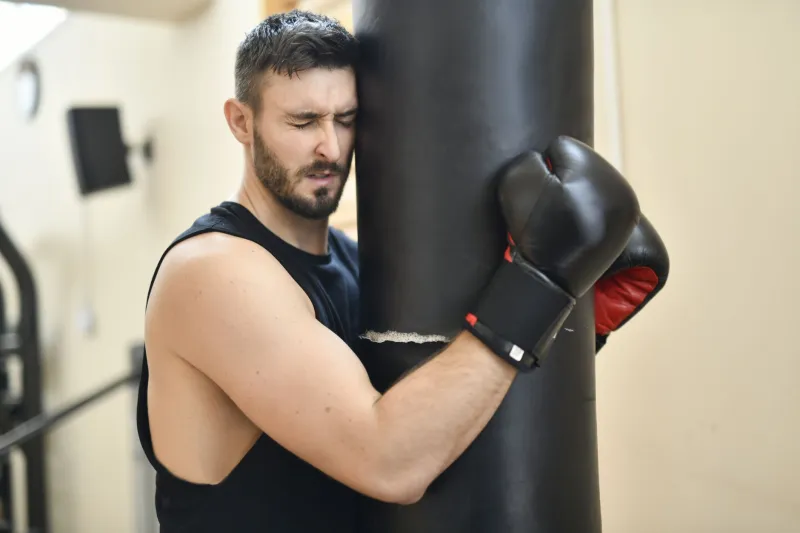
The round ends. You walk to your corner — or step off the mat — and sit down. Your heart rate may be elevated past 170 beats per minute. Your legs feel heavier than they should. You may have just been dropped, swept, or caught with something you did not see coming. And in approximately sixty seconds, you will stand up and do it again.
What happens in that window is not a break from the competition. It is, in many respects, the competition itself.
The psychological demands of the inter-round interval are rarely discussed in structured training environments, yet elite competitors in every striking and grappling discipline have developed — consciously or intuitively — a set of mental tools that allow them to step back into the arena with something resembling composure. Understanding those tools, and the neuroscience that explains why they work, can meaningfully alter how you perform when the pressure is highest.
Why the Brain Struggles to Reset Under Competitive Stress
To understand what recovery between rounds requires, it is worth examining what the brain is doing during high-stakes competition. When you enter a fight — whether it is an MMA bout, a boxing match, or a point-sparring tournament — your sympathetic nervous system activates in full. Adrenaline and cortisol flood the system. Heart rate elevates. Peripheral vision narrows. Cognitive processing becomes faster in some respects and significantly impaired in others.
This physiological state is adaptive for short bursts of physical survival behavior. It is not adaptive for the kind of complex, multi-variable decision-making that competitive martial arts demands. The prefrontal cortex — the seat of strategic thinking, emotional regulation, and executive function — is effectively suppressed by high cortisol levels. You become reactive rather than deliberate. You feel rather than think.
The interval between rounds does not automatically reverse this state. Without intentional intervention, many competitors sit in their corners still flooded with stress hormones, replaying what went wrong, catastrophizing about what might happen next, and compounding their physiological distress with psychological noise. By the time they stand up, they are often more compromised than they were when the round ended.
The goal of the inter-round reset is to interrupt that cycle — to actively shift the nervous system from sympathetic dominance toward a more regulated state where clear thinking becomes possible again.
The Physiology of Recovery: Why Breathing Is Not Optional
The fastest, most evidence-supported tool for nervous system regulation in a short time window is controlled breathing. Specifically, extended exhalation activates the parasympathetic nervous system through stimulation of the vagus nerve, reducing heart rate and beginning to lower cortisol levels. This is not a relaxation technique in the conventional sense — it is a direct physiological intervention.
The protocol used by many combat sports coaches and sports psychologists working with American fighters involves a structured breathing pattern during the inter-round rest: a moderate inhalation through the nose for approximately four counts, followed by a slow, controlled exhalation through the mouth for six to eight counts. Repeating this pattern three to five times within the first twenty seconds of the rest period can produce a measurable reduction in heart rate and a perceptible shift in cognitive clarity.
What this does neurologically is significant. By activating the parasympathetic response, you begin to restore prefrontal cortex function — the capacity to think strategically, access trained responses, and regulate emotional reactivity. You are not calming yourself into passivity. You are restoring the cognitive access necessary to compete intelligently.
The Internal Monologue: Self-Talk as a Performance Variable
Once the physiological intervention is underway, the content of your internal monologue becomes the next critical variable. Research in sports psychology consistently identifies self-talk — the internal narrative a competitor maintains during performance — as one of the most powerful predictors of performance consistency under pressure.
Negative self-talk in the corner is remarkably common and remarkably destructive. I'm losing this. That shot hurt more than it should have. I can't let this happen again. Each of these statements, however honest they may feel, reinforces a threat-based cognitive frame that sustains sympathetic activation and narrows behavioral options. The brain, primed for survival, begins selecting the most conservative possible responses — which in a competition context typically means hesitation, passivity, and reactive rather than proactive engagement.
The replacement is not false positivity. Empty affirmations — I'm great, I've got this, nothing can stop me — are psychologically thin and collapse quickly under actual pressure. What works is process-focused, specific, and actionable self-talk. My jab timing is there. Stay on the outside and make him reach. Use the angle off the back foot. This kind of internal language is grounded in concrete technical reality, which makes it credible to the competitive brain even under duress.
For tournament karate competitors, the translation is direct: between matches, rather than evaluating your score or your opponent's reputation, redirect your internal attention to one or two specific technical intentions for the next exchange. Specificity is the antidote to anxiety.
Corner Communication and the Role of External Cues
For fighters who have a corner team — coaches, training partners, or support staff — the inter-round environment introduces an external layer of psychological influence that can either accelerate recovery or deepen distress. Effective corner communication is not simply tactical instruction; it is emotional regulation delivered through language, tone, and physical presence.
The most effective corner interactions observed at the competitive level in American gyms tend to share several characteristics: they are calm in delivery, brief in scope (one or two clear priorities rather than a comprehensive tactical overview), and they conclude with a forward-looking statement that anchors the fighter's attention on the next round rather than the previous one. A corner that spends fifty seconds reviewing everything that went wrong in round one is, neurologically speaking, keeping the fighter's brain in round one.
If you train at a gym where corner coaching is part of your preparation, it is worth having an explicit conversation with your coach about this dynamic. Request that their inter-round communication be structured around what you will do next, not what you failed to do previously.
Momentum Shifts and the Discipline of the Short Memory
Perhaps the most psychologically challenging scenario in live competition is the momentum shift — the moment when the fight turns, when you absorb a knockdown, a sweep, or a submission attempt that you barely escape. The emotional weight of that moment does not simply evaporate when the round ends. It travels into the corner with you, and if left unaddressed, it travels back into the next round as well.
Elite competitors across disciplines — from wrestlers at the NCAA level to professional boxers on national cards — have spoken extensively about the cultivation of what is sometimes called the short memory: the trained capacity to acknowledge an adverse event, extract any useful tactical information from it, and then deliberately release its emotional charge before re-engaging.
This is not denial. It is a practiced cognitive skill. The momentum shift happened. It provided information — perhaps about a positional weakness, a timing gap, or a defensive habit. That information is worth keeping. The emotional distress attached to it is not. The discipline of the short memory involves consciously separating those two things in the corner and choosing to carry only what serves you forward.
Bringing It Into Your Training
The inter-round reset is a skill, and like every skill in martial arts, it must be deliberately practiced before it can be reliably accessed under pressure. Consider incorporating structured inter-round simulations into your training — timed rounds with intentional rest intervals where you practice the breathing protocol, the self-talk reset, and the forward-focused intention-setting described above. Do this in training so that the pattern is grooved before you ever enter a competitive environment.
The bell will ring again. The question is not whether you will be ready — it is whether you have trained the part of yourself that decides.