Iron Hands: Why Grip Strength Is the Hidden Engine Behind Every Effective Fighter

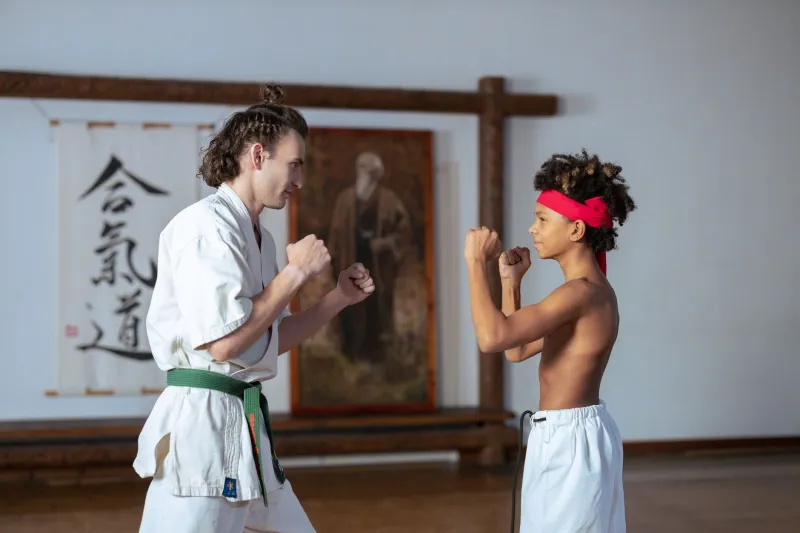
Photo by Photo by Ile Ristov on Unsplash on Unsplash
Ask most martial artists what separates competitive fighters from casual practitioners, and the answers follow a predictable pattern: speed, timing, cardio, technique. Grip strength almost never enters the conversation. That omission is costly.
The hand's connection to an opponent — whether seizing a collar, controlling a wrist, clinching a neck, or anchoring a guard — is the foundational contact point of virtually every combat exchange. When that contact point is weak, every technique built upon it becomes structurally compromised. Grip is not a supplemental attribute. It is the infrastructure through which all other skills are delivered.
At Pratap Singh Martial Arts, we have observed this gap repeatedly in students who arrive technically sound but physically limited in ways they cannot yet name. The diagnosis is almost always the same: undertrained hands.
Why Grip Affects More Than You Think
Grip strength operates through a phenomenon called irradiation — a neurological process in which maximum contraction of the hand and forearm activates surrounding musculature throughout the arm, shoulder, and even the core. When you grip with genuine force, you are not simply holding something. You are triggering a cascade of tension that stabilizes your entire kinetic chain.
For grapplers, this means that a stronger grip translates directly into more effective takedowns, tighter submissions, and more durable takedown defense. For strikers, a fully closed fist at the moment of impact — made possible only by genuine grip endurance — increases power transfer while reducing the risk of hand injuries. For clinch fighters in Muay Thai, wrestling, or judo, grip dictates who controls the exchange and who is merely reacting to it.
The connective tissue of the forearm is also notoriously slow to adapt. While muscles respond to training stimulus within weeks, tendons and ligaments require months of progressive loading to strengthen adequately. Fighters who neglect grip conditioning early in their development often encounter a ceiling — their technique outpaces their structural capacity, and injuries follow.
Benchmarks by Skill Level
Understanding where you stand requires objective measurement. The following benchmarks reflect functional grip capacity relevant to combat sports performance, not general fitness standards.
Beginner (0–12 months of training) A beginner should be able to maintain a controlled dead hang from a pull-up bar for 30 seconds, perform 10 towel pull-ups with assistance, and sustain a grip on a heavy bag during 20 consecutive clinch repetitions without fatigue-driven release.
Intermediate (1–3 years of training) At this stage, a fighter should hold a dead hang for 60 seconds, complete 10 unassisted towel pull-ups, and demonstrate consistent grip integrity through three five-minute rounds of live grappling without significant forearm pump affecting technique.
Advanced (3+ years of competitive training) An advanced practitioner should sustain a one-arm dead hang for 20 seconds per side, close a heavy-duty grip trainer (200+ lbs resistance) for 20 repetitions per hand, and maintain functional grip strength through full competition-length bouts under fatigue conditions.
Use these as diagnostic tools, not as rigid pass-fail standards. The goal is progressive movement through each tier.
The Progression Framework
The most practical approach to grip development integrates training into existing sessions rather than demanding additional workout days. The following three-phase framework accomplishes exactly that.
Phase One: Foundation (Weeks 1–6)
During this phase, the priority is structural preparation — conditioning tendons and ligaments before loading them aggressively.
- Towel hangs: Replace standard bar hangs with a doubled gym towel draped over the bar. Grip both ends and hang for sets of 20–40 seconds. Perform three sets at the end of every training session.
- Plate pinches: Pinch two weight plates together (smooth sides out) and hold for 30-second intervals. Begin with 10-pound plates and progress conservatively.
- Bucket rice training: Submerge your hands in a bucket of dry rice and perform opening, closing, and rotating movements for two minutes. This builds extensor strength — the frequently neglected counterpart to grip flexors.
Phase Two: Load Development (Weeks 7–14)
With foundational tissue integrity established, introduce heavier and more sport-specific loading.
- Gi or rope pull-ups: Perform all pull-up work using a gi jacket or thick rope rather than a standard bar. This dramatically increases grip demand while building the specific hand positioning used in grappling exchanges.
- Farmers carries with pinch grip: Carry weight plates (pinched, not held through a handle) for 40-yard intervals. Integrate these at the end of strength training days.
- Rolling thunder or thick-bar deadlifts: If your gym has access to a thick bar or a rolling thunder attachment, substitute it for standard bar work on deadlift days. Even modest loads become significantly more demanding.
Phase Three: Sport Integration (Weeks 15+)
The final phase embeds grip conditioning directly into technical practice.
- Grip-fatigued drilling: Spend the final 10 minutes of every grappling session drilling takedowns and submissions immediately after a two-minute all-out grip effort. This trains your technique to hold under the exact fatigue conditions you will encounter in competition.
- Timed clinch holds: With a partner, practice sustained clinch control for 60-second intervals, resisting their attempts to break your grip. Alternate roles.
- Dead hang finishers: Close every training session with a 45-second dead hang using a towel or rope. It takes under a minute and compounds significantly over weeks.
Maintaining Balance
Grip training carries a meaningful injury risk when progressed too aggressively. Tendonitis in the forearm and elbow is common among fighters who load the flexors without equally developing the extensors. The rice bucket work in Phase One is not optional — it is the counterbalance that keeps the system healthy.
Rest is equally non-negotiable. The hands require 48 hours of recovery between intensive grip sessions. Structure your progression with that window in mind.
The Competitive Difference
In a closely matched exchange between two technically similar fighters, grip endurance frequently determines the outcome. The fighter whose hands remain strong in the fourth and fifth rounds — whose clinch control does not degrade, whose submissions do not slip, whose punches land with the same structural integrity as they did in round one — holds a durable competitive advantage that no amount of technical polish can replicate.
Building that advantage begins now, in the ordinary sessions that most fighters treat as routine. Train the hands with the same intentionality you bring to every other attribute, and the results will make themselves felt long before your opponent realizes what is happening.