Gray Hair, Golden Hands: Why America Can't Afford to sideline Its 60-Year-Old Instructors
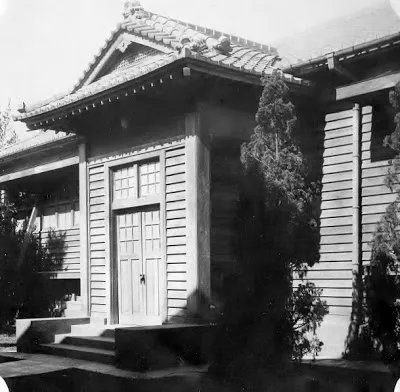
Photo: Unknown authorUnknown author, Public domain, via Wikimedia Commons
Somewhere in America tonight, a sixty-two-year-old black belt is being quietly edged toward the margins of the school he built. The owners — often investors rather than martial artists — want younger coaches on the floor, faster-paced classes, content for the Instagram grid. The old master's knowledge, they have decided, does not photograph well.
I want to make the opposing case, and I want to make it firmly: the American martial arts industry is in the process of discarding its single most valuable instructional asset, and it is doing so at the exact moment that asset is reaching peak teaching capability.
The Youth Bias We Don't Discuss
American combat sports culture is unapologetically youth-worshipping. Our champions are young, our highlight reels are young, and our coaching hierarchies increasingly follow. The assumption underneath it all is simple: fighting is a young person's game, so teaching it must be too.
But this confuses two entirely different crafts. Performing a technique at championship speed and transmitting that technique to a nervous beginner are separated by a chasm of skill. Some of the worst coaches I have known were phenomenal fighters. Some of the finest teachers I have ever watched could no longer demonstrate a full-intensity round if their lives depended on it.
Teaching is its own discipline, and like every discipline, it compounds with time.
What a Sixty-Year-Old Instructor Actually Knows
Consider what an instructor accumulates across four decades on the mat. They have taught the flexible prodigy and the forty-year-old accountant with a frozen shoulder. They have watched a thousand students quit and understand, with uncomfortable precision, the exact week and the exact reason. They have survived style wars, gym politics, injuries, and the slow erosion of their own athletic prime — and emerged with a philosophy rather than just a game plan.
A veteran instructor also teaches with what I can only call economy. Where a young coach demonstrates a technique five ways and hopes one lands, the veteran reads the student, diagnoses the single faulty detail, and fixes it in one sentence. That diagnostic ability is not charisma. It is ten thousand hours of watching bodies fail in patterns.
Adaptation, Not Decline
None of this is to say senior instructors should be treated as museum pieces or that aging bodies require no accommodation. The best sixty-year-old teachers I know have adapted deliberately and intelligently. They demonstrate in segments rather than at speed. They rely on senior students as demonstration partners. They lean harder on conceptual teaching — timing, distance, intent — which ages far better than explosive physical display.
And here is the uncomfortable truth many schools miss: this adaptation often makes them better teachers, not worse. A coach who can no longer rely on athleticism must communicate with precision. Necessity has refined their instruction in ways a young coach, still coasting on physical gifts, has never been forced to consider.
The Stakes Are Larger Than Any Single School
There is also a generational urgency here. The American martial arts boom of the 1980s and 1990s produced an extraordinary cohort of instructors who are now, as a group, crossing into their sixties. Traditional Japanese, Chinese, Korean, and Filipino arts in this country are particularly exposed — much of their living transmission rests on teachers whose knowledge was never fully documented.
When these instructors retire without successors, techniques, pedagogical methods, and entire cultural lineages vanish. We speak often about preserving martial traditions. Preservation does not happen in archives. It happens when a school makes a deliberate decision to keep its senior teacher central, pair them with a younger apprentice-instructor, and fund that mentorship as seriously as it funds marketing.
What Schools and Students Should Do
For academy owners: build a two-tier teaching model. Let your senior instructor own curriculum design, instructor development, and the students who need the deepest technical correction. Let younger coaches run the high-energy classes and the competition prep. Both are essential; neither is complete alone.
For students: seek out the oldest teacher in the building at least occasionally. Take a private lesson. Ask them why a technique works, not just how. You will frequently find that the answer to your decade-old sticking point was sitting across the room the entire time.
Honor Has a Practical Meaning
Our brand's creed — train hard, fight smart, live with honor — is easy to post on a wall and hard to practice. Living with honor, in this industry, means refusing to treat our elders as obsolete inventory. It means recognizing that the sixty-year-old on your mat carries something no twenty-five-year-old competitor can sell you: the complete arc of a martial life, distilled into every lesson they teach.
The industry that wastes its old teachers will eventually deserve the shallow instruction it receives. The rest of us should know better.