Ninety Days In: The Beginner's Field Guide to Surviving — and Enjoying — Your First Months on the Mat
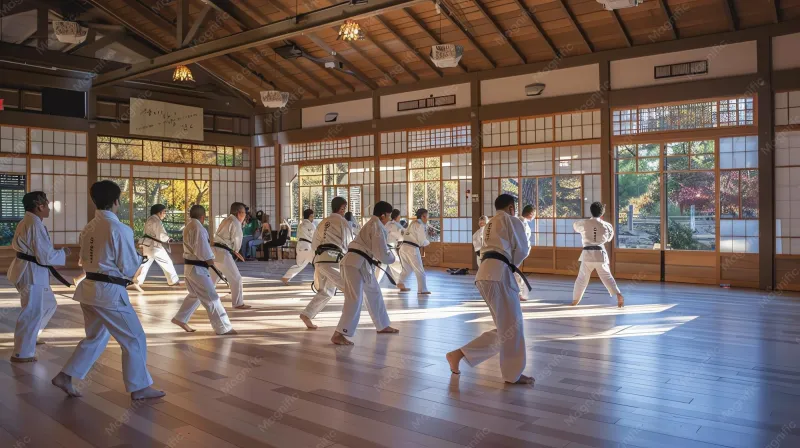
Photo: beginner white belt martial arts student training in dojo, via img.freepik.com
Walk into any American martial arts academy in January and return in April. The floor that was crowded with new white belts will, in most schools, be noticeably thinner. Industry attrition figures consistently suggest that a large share of new students quit within their first ninety days — not because they lack talent, but because they stumble into the same handful of predictable traps.
After decades of coaching students across every age group and ambition level, I have come to view the first three months not as a test of athleticism, but as a test of expectations. Below are the ten mistakes I see most often, along with the corrections that will carry you past the ninety-day mark and into genuine, lasting progress.
Mistake 1: Treating Every Class Like a Title Fight
Beginners frequently believe that effort equals intensity. They roll hard, spar early, and leave the mat drained, sore, and quietly discouraged.
The fix: During your first months, your objective is acquisition, not victory. Move at sixty to seventy percent effort. The students who survive are the ones who learn to train at a pace they can repeat tomorrow.
Mistake 2: Buying the Entire Pro Shop Before Your Third Class
There is a particular species of beginner who arrives with competition-grade gloves, four gis, and custom shin guards — and cannot yet throw a proper stance transition.
The fix: Purchase the required uniform and basic protective gear. Nothing more. Let your instructor tell you what your development actually demands. Gear is a consequence of progress, not a substitute for it.
Mistake 3: Measuring Yourself Against the Veterans
Watching a ten-year practitioner flow effortlessly across the mat is inspiring for some beginners and demoralizing for others. Unfortunately, the demoralized tend to leave.
The fix: Compare yourself only to your own first week. Keep a simple training journal. Progress in martial arts is measured in months and years, and the only fair benchmark is the person you were when you walked in.
Mistake 4: Attending Every Single Session Offered
Enthusiasm is precious, and beginners often burn it recklessly — six classes in seven days, followed by a two-week absence once the body rebels.
The fix: Two to three sessions per week is the proven sweet spot for new students. Consistency over months will always outperform intensity over weeks.
Mistake 5: Skipping the Fundamentals Class
Advanced classes look exciting. Fundamentals classes look repetitive. Beginners gravitate toward the former and quietly sabotage themselves.
The fix: Repetition is not a flaw in martial arts instruction; it is the method itself. The student who drills hip movement and guard retention for a year will pass the student who collected highlights.
Mistake 6: Ignoring What the Body Is Reporting
New students often cannot distinguish between productive soreness and injury. They push through both, or worse, they quit over the former.
The fix: Learn the difference early. Sharp, joint-specific pain demands rest and, when persistent, a professional opinion. General muscular soreness is simply the tuition you pay for adaptation. When in doubt, ask your instructor — a good one would rather answer the question than treat the injury.
Mistake 7: Treating Tapping as Failure
No habit drives beginners out of training faster than the belief that tapping is defeat. They resist, they strain, and eventually they get hurt.
The fix: Reframe the tap as information. Every submission you concede in a controlled environment is a lesson purchased at no cost. The students who tap early and often are the students still training a decade later.
Mistake 8: Training Without Any Goal Beyond 'Getting In Shape'
Vague motivation produces vague commitment. When progress inevitably plateaus — and it will — students without specific aims have nothing to anchor them.
The fix: Set one concrete ninety-day objective: a clean execution of the core curriculum, attendance at a set number of classes, or participation in your first controlled sparring session. Write it down. Review it monthly.
Mistake 9: Staying Silent When Confused
Pride keeps many beginners from asking questions. They nod along in class, practice the technique incorrectly at home, and cement bad habits.
The fix: Ask after class. Instructors at serious academies expect questions and generally respect students who ask them. A thirty-second clarification can save you six months of misdirected practice.
Mistake 10: Forgetting That Character Is the Curriculum
Beginners often treat the academy as a gym and the training as a transaction. They clip fingernails irregularly, skip belt-tying etiquette, and rush through bow-ins.
The fix: The rituals exist for a reason. Honor, humility, and respect are not decorative — they are the operating system of a serious martial artist. The student who embodies them earns the trust of training partners, and training partners are the true engine of your development.
The Ninety-Day Promise
Here is what I tell every new student at our academy: if you train consistently, protect your body, ask questions, and leave your ego at the door, you will not recognize yourself in three months. Not physically — though that will come — but in how you carry difficulty, absorb correction, and show up for others.
The white belt is not a rank. It is a posture of openness. Guard it well, and the next ninety days will be the beginning of something you keep for life.