The Volume Trap: What Happens When Hustle Culture Meets the Martial Arts Mat

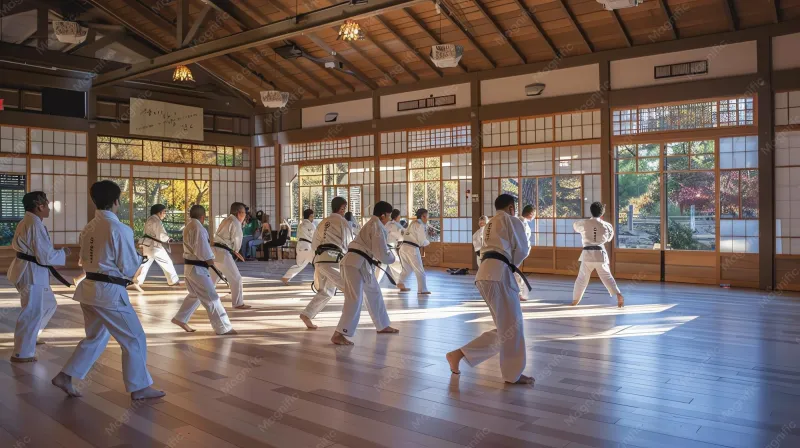
Photo: exhausted athlete resting recovery martial arts gym training, via videocdn.cdnpk.net
The American hustle ethic has found a new home: the martial arts academy. Scroll through any training hashtag and you will find the vocabulary of the grind — 'no days off,' 'double sessions,' '5AM cardio before evening class.' The message is unmistakable: the person training more than you is the person beating you.
There is a kernel of truth in this. Volume matters. Champions do train more than hobbyists. But the grind narrative omits the half of the equation where adaptation actually occurs, and for the average American student, that omission is quietly producing burnout, plateaus, and a steady drip of quitters.
Where the Grind Model Comes From — and Why It Doesn't Translate
The two-a-day ethos descends largely from American football and scholastic wrestling, sports with institutional support systems: team athletic trainers, structured off-seasons, and recovery resources most gym members cannot access. When the average student imports the schedule without the support structure, they import only the damage.
Meanwhile, the traditional academies of Asia and the elite fight camps of modern MMA arrived at the same conclusion from opposite directions: training must be periodized. Load and recovery alternate in deliberate cycles. Even the most demanding fight camps — the ones producing athletes for championship bouts — are built around waves of intensity followed by genuine deload weeks. The grinder's flat, maximum-effort-every-day calendar would be unrecognizable to nearly every professional coach in combat sports.
What Recovery Science Actually Says
The physiological picture is straightforward, even if the Instagram version is not. Training does not make you better; it makes you worse, temporarily. Recovery makes you better. Muscle tissue repairs, nervous system efficiency returns, and connective tissue adapts during rest — particularly sleep. Chronic under-recovery produces the familiar cascade: elevated resting heart rate, declining coordination, persistent joint aches, irritability, and the mysterious plateau that no amount of additional volume breaks.
Research on overtraining consistently shows that performance gains stall or reverse well before athletes feel subjectively 'wrecked,' which is precisely why grinders keep adding volume — the warning lights arrive late.
When More Volume Genuinely Helps
Honesty requires acknowledging that the grind critique can swing too far. There are real cases where increased volume is exactly right:
- Fight prep. A fighter eight weeks from a bout needs high volume — structured, monitored, and matched with proportional recovery.
- Breaking a specific plateau. A short, deliberate block of extra drilling on one weakness can be transformative.
- Immersion phases. Students on school breaks or sabbaticals can benefit from temporarily elevated frequency, provided intensity is moderated.
The common thread is intention and structure. More volume works when it is a planned phase with a defined end. It fails when it is a permanent identity.
A Sustainable Week for the Working Student
For the majority of American martial artists — people with jobs, families, and finite sleep — here is the structure I recommend to students at our academy:
Monday: Technique class, moderate intensity. Tuesday: Rest or light mobility work at home. Wednesday: Technique plus controlled sparring or rolling. Thursday: Rest. Friday: Live training, higher intensity. Saturday: One longer session — open mat, conditioning, or a second discipline. Sunday: Full rest. Non-negotiable.
That is four training days, three recovery days, and a schedule you can hold for twenty years. Notice what it is not: it is not lazy. It is periodized for a life that includes a Monday morning meeting.
Reframing What 'Hard' Means
The deepest problem with grind culture is not the schedule — it is the definition of toughness it sells. Under this thinking, resting is weakness and restraint is softness. But any coach who has developed long-term athletes will tell you the opposite: the hardest skill in training is moderation, and the toughest student in the room is often the one disciplined enough to stop.
Train hard, our creed says. But fight smart comes immediately after, and the order is not accidental. Intelligence about volume — knowing when to push and when to pull back — is not the enemy of hard work. It is what makes hard work compound.
The mat will be there tomorrow. Train in a way that guarantees you will be too.